How Repair Services Help Maintain Compliance in Regulated Industries

In 2026, regulatory compliance remains one of the most critical priorities across industries such as telecommunications, aerospace, automotive, healthcare, defense, and manufacturing. As technologies become more advanced and quality standards continue to evolve, organizations are under increasing pressure to ensure that every piece of testing and measurement equipment performs accurately and reliably.
A single equipment malfunction can lead to inaccurate test results, failed audits, production delays, or even regulatory penalties. This is why repair and maintenance programs have become essential components of compliance strategies. Rather than waiting for equipment failures to disrupt operations, organizations are investing in proactive support services that help keep systems operating within required specifications.
Among the most valuable solutions available today are Test Equipment Repair Services, which help organizations maintain the performance, reliability, and compliance of critical testing infrastructure. By restoring equipment to proper working condition and ensuring measurement accuracy, these services support both operational efficiency and regulatory readiness.
Key Takeaways
Compliance depends heavily on the accuracy and reliability of testing equipment.
Equipment failures can lead to audit risks, production delays, and regulatory violations.
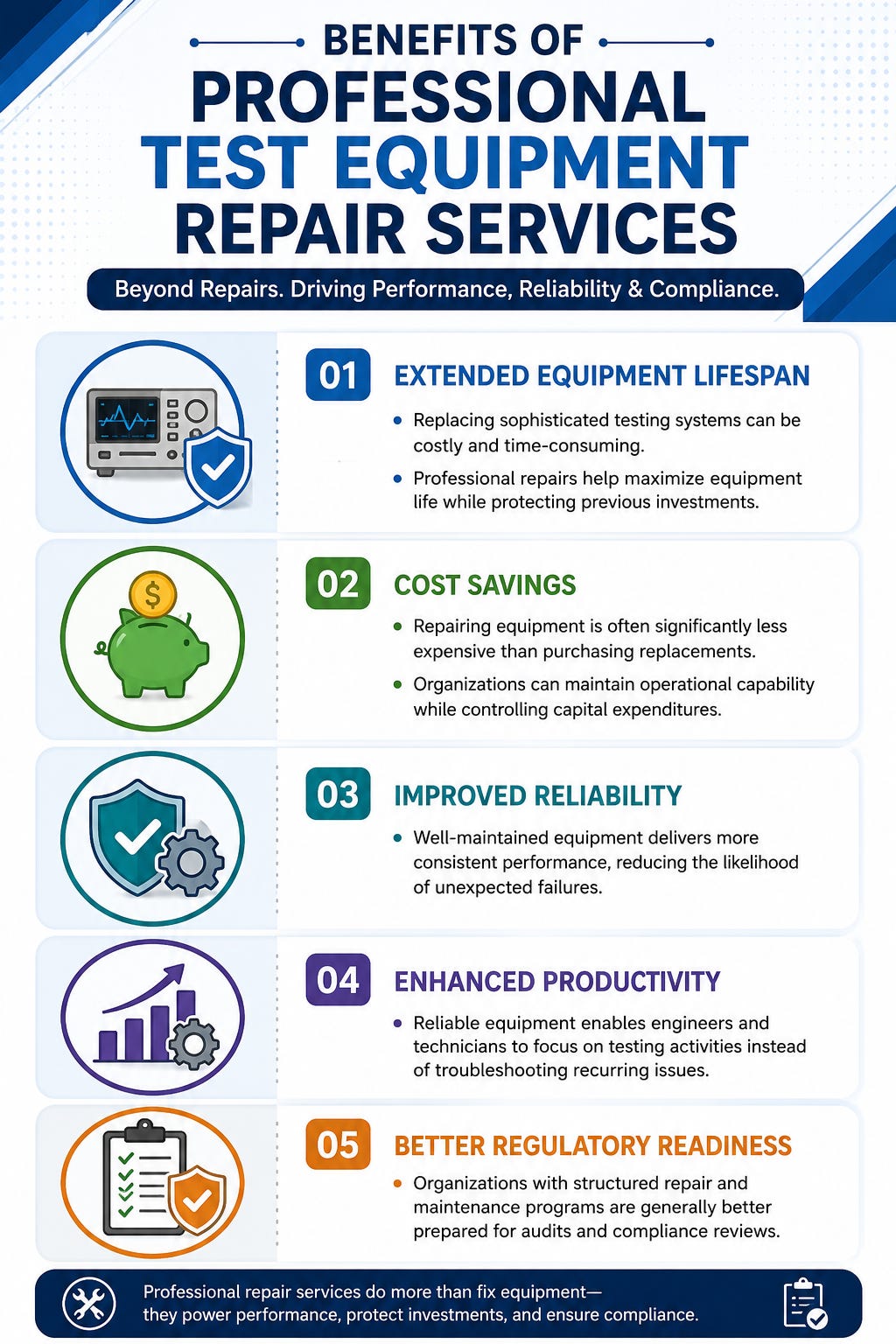
Professional repair services help extend equipment lifespan while maintaining performance standards.
Preventive maintenance and timely repairs reduce downtime and unexpected costs.
Selecting the right repair partner is essential for long-term compliance success.
Why Compliance Matters More Than Ever
Regulated industries operate under strict standards designed to ensure safety, quality, and consistency. Whether manufacturing medical devices, validating wireless communication systems, testing automotive electronics, or producing aerospace components, organizations must demonstrate that their testing processes are accurate and repeatable.
Regulatory bodies and industry standards often require documented evidence showing that test equipment is functioning correctly. If equipment is damaged, improperly calibrated, or operating outside acceptable tolerances, organizations may struggle to prove compliance.
As testing environments become more complex, maintaining equipment integrity is no longer optional—it is a business necessity.
The Link Between Equipment Performance and Regulatory Compliance
Testing equipment plays a critical role in validating product quality, safety, and performance. Engineers rely on instruments such as signal generators, spectrum analyzers, network analyzers, RF chambers, automated test systems, and measurement devices to verify product specifications.
When equipment performance degrades, several problems can occur:
Inaccurate measurements
Failed compliance testing
Product recalls
Audit findings
Increased rework costs
Production delays
Even minor equipment issues can create significant risks in highly regulated environments. Repair services help address these issues before they affect compliance outcomes.
Common Causes of Equipment Failure
Many organizations assume equipment failures occur suddenly, but most issues develop gradually over time.
Common causes include:
Wear and Tear
Continuous operation naturally causes components to age. Connectors, cables, switches, relays, and electronic assemblies can deteriorate after years of use.
Environmental Factors
Heat, humidity, dust, vibration, and electromagnetic interference can negatively affect equipment performance.
Improper Handling
Frequent transportation, incorrect storage practices, and accidental damage can compromise measurement accuracy.
Software and Firmware Issues
Modern testing systems often depend on software integration. Outdated firmware or corrupted configurations may impact functionality and compliance.
Aging Infrastructure
Older equipment may continue functioning but gradually drift outside required performance specifications without obvious warning signs.
Regular inspections and professional repairs help identify and correct these issues before they create compliance concerns.
How Repair Services Support Compliance Requirements
Repair services do much more than fix broken equipment. They help organizations maintain operational readiness and meet industry standards consistently.
Restoring Measurement Accuracy
Accurate measurements form the foundation of compliance testing. Repair specialists diagnose equipment issues and restore instruments to their intended operating specifications.
This helps ensure that test results remain reliable and defensible during audits and certification processes.
Reducing Audit Risks
Regulatory audits often examine testing procedures, maintenance records, and equipment performance history.
Documented repair and maintenance activities demonstrate that organizations actively manage equipment reliability and quality assurance processes.
Supporting Calibration Programs
Many repair providers work alongside calibration services to verify equipment performance after repairs are completed.
This combination helps organizations maintain traceability and measurement confidence across their testing environments.
Preventing Unexpected Downtime
Equipment failures can interrupt testing schedules and delay product launches.
Timely repairs reduce operational disruptions while helping teams stay compliant with production timelines and quality requirements.
Best Practices for Maintaining Compliance Through Repair Programs
Organizations seeking long-term compliance should adopt a proactive approach to equipment maintenance.
Establish Preventive Maintenance Schedules
Routine inspections can identify performance issues before they become critical failures.
Maintenance schedules should align with equipment usage patterns and manufacturer recommendations.
Keep Detailed Service Records
Documentation is essential for demonstrating compliance.
Maintain records of repairs, maintenance activities, calibration results, and performance verification procedures.
Train Personnel Properly
Operators should understand correct handling, storage, and usage procedures.
Proper training helps reduce accidental damage and unnecessary repairs.
Monitor Equipment Performance Trends
Tracking performance data can reveal early warning signs of degradation.
Predictive maintenance strategies allow organizations to address issues before they affect compliance.
Work With Qualified Service Providers
Choose repair providers with experience supporting regulated industries and complex testing environments.
Expert technicians understand both equipment requirements and compliance expectations.
What to Look for in a Repair Service Provider
Not all repair services offer the same level of expertise.
When evaluating providers, consider the following factors:
Technical Expertise
Look for providers with experience repairing RF systems, telecommunications equipment, automated test systems, and specialized measurement instruments.
Diagnostic Capabilities
Advanced diagnostics help identify root causes rather than simply addressing symptoms.
Quality Assurance Processes
Providers should follow documented procedures to ensure consistent repair quality.
Calibration Support
Integrated repair and calibration services can simplify compliance management.
Fast Turnaround Times
Quick repairs help minimize downtime and keep projects on schedule.
Industry Experience
Providers familiar with regulated environments understand the importance of documentation, traceability, and compliance requirements.
The Future of Equipment Maintenance and Compliance
As Industry 4.0 technologies continue to evolve, equipment maintenance strategies are becoming more sophisticated.
Artificial intelligence, predictive analytics, remote diagnostics, and digital monitoring systems are transforming how organizations manage testing infrastructure.
Rather than reacting to failures, many companies now use real-time performance data to predict maintenance needs before problems occur.
This proactive approach improves equipment availability, reduces costs, and strengthens compliance programs.
In the coming years, organizations that combine predictive maintenance with professional Test Equipment Repair Services will be better positioned to meet increasingly demanding regulatory requirements.
Strengthen Compliance with Reliable Equipment Support
Maintaining compliance in regulated industries requires more than meeting standards on paper. It demands reliable testing infrastructure, accurate measurements, and proactive maintenance strategies that support operational excellence every day.
By investing in professional Test Equipment Repair Services, organizations can reduce downtime, improve reliability, extend equipment life, and remain prepared for evolving regulatory requirements. For companies seeking trusted expertise in advanced testing environments, Orbis Systems continues to deliver innovative solutions that help businesses maintain performance, quality, and compliance with confidence.
Frequently Asked Questions
What are Test Equipment Repair Services?
Test Equipment Repair Services involve diagnosing, repairing, restoring, and verifying the performance of testing and measurement equipment used in industries such as telecommunications, aerospace, automotive, healthcare, and manufacturing.
How do repair services help with regulatory compliance?
Repair services ensure equipment operates within required specifications, helping organizations maintain accurate measurements, support calibration programs, and provide documentation needed for audits and regulatory reviews.
How often should test equipment be inspected or repaired?
Inspection frequency depends on equipment type, usage intensity, and industry requirements. Many organizations combine routine preventive maintenance with repairs whenever performance issues are detected.
Can repairing equipment be more cost-effective than replacement?
Yes. In many cases, repairing sophisticated testing equipment costs significantly less than purchasing new systems while extending equipment lifespan and maintaining operational capabilities.
What industries benefit most from Test Equipment Repair Services?
Industries with strict quality and compliance requirements—including aerospace, defense, telecommunications, automotive, electronics manufacturing, and healthcare—benefit greatly from professional repair services.
What should organizations look for when selecting a repair provider?
Organizations should prioritize technical expertise, quality assurance processes, diagnostic capabilities, calibration support, industry experience, and fast turnaround times.