Frequently Asked Questions About RF Isolation Racks

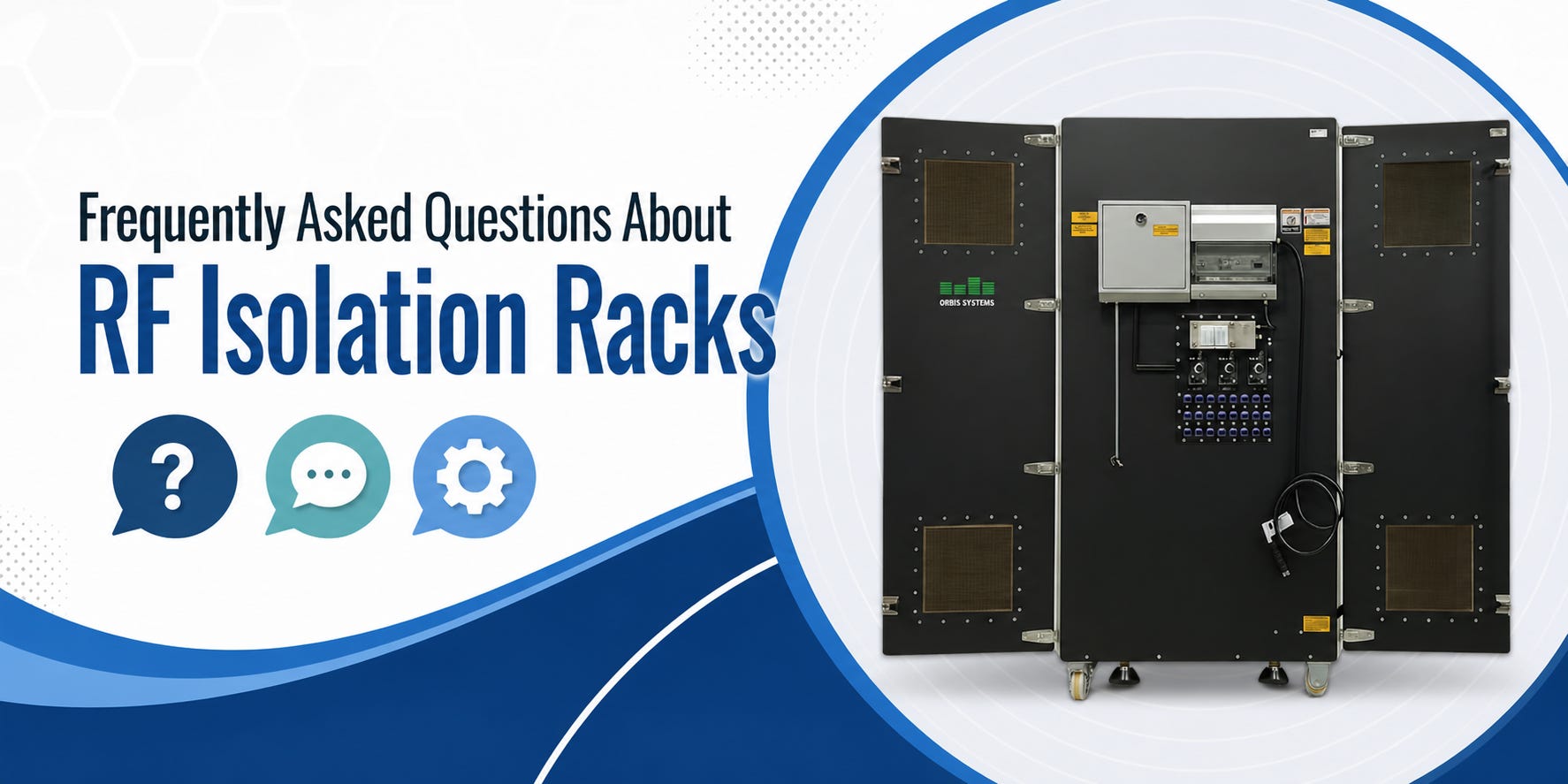
1. What Is an RF Isolation Rack Used For?
An RF isolation rack is designed to create a controlled electromagnetic environment for RF and wireless testing. It helps isolate sensitive devices and test equipment from external electromagnetic interference (EMI) while also preventing internal signals from leaking outside the test setup.
These racks are commonly used in:
Wireless device testing
RF module validation
Production testing environments
Telecom equipment testing
Research and development labs
By reducing unwanted interference, RF isolation racks help engineers achieve accurate, repeatable, and reliable measurement results.
2. How Does an RF Isolation Rack Improve RF Test Accuracy?
Measurement accuracy is critical in RF testing, especially when working with technologies such as 5G, Wi-Fi, Bluetooth, IoT, and automotive radar systems.
An RF isolation rack improves accuracy by:
Blocking external RF noise
Preventing signal leakage
Reducing EMI-related measurement errors
Creating stable and repeatable test conditions
Without proper isolation, nearby wireless signals, electronic equipment, or environmental noise can affect test results. An RF isolation rack minimizes these variables, allowing engineers to trust their measurements.
3. RF Isolation Rack vs RF Shielded Box: What’s the Difference?
Although both solutions provide RF shielding, they serve different purposes.
An RF shielded box is usually compact and designed for testing individual devices such as smartphones, modules, or IoT devices.
An RF isolation rack, on the other hand, is larger and built to integrate multiple instruments, cables, switches, and automated testing systems.
Key differences include:
RF Shielded Box
Compact enclosure
Device-level testing
Portable applications
RF Isolation Rack
Larger system integration
Multi-instrument setups
Automated production testing
The right choice depends on your application, test environment, and system complexity.
4. How Much Shielding Do RF Isolation Racks Provide?
Shielding performance is typically measured in decibels (dB), which indicates how effectively the enclosure blocks electromagnetic signals.
Depending on design, materials, sealing quality, and frequency range, an RF isolation rack may provide:
60 dB isolation for standard applications
80–100 dB or more for high-performance testing
The actual shielding level depends on:
Frequency range
Door sealing and RF gaskets
Cable feedthrough design
Construction materials
Higher isolation levels are often required in advanced wireless and precision RF testing environments.
5. Can RF Isolation Racks Be Used in Automated Test Systems?
Yes, many RF isolation racks are specifically designed for automated test environments.
They can be integrated with:
Robotic handling systems
Automated test equipment (ATE)
Switching matrices
RF signal generators and analyzers
Software-controlled measurement systems
Automation improves test speed, consistency, and repeatability while reducing manual intervention.
This makes RF isolation racks ideal for high-volume production testing and continuous validation environments.
6. How Do You Choose the Right RF Isolation Rack for 5G Testing?
5G testing introduces unique challenges because of higher frequencies, wider bandwidths, MIMO systems, and beamforming technologies.
When selecting an RF isolation rack for 5G applications, consider:
Required frequency coverage
Isolation performance across bands
Interface connectivity options
Automation compatibility
Thermal management
Space for instruments and DUTs
A well-designed rack ensures stable performance and accurate measurements throughout the testing process.
7. What Features Should You Look for in RF Isolation Racks?
When evaluating RF isolation racks, key features include:
High shielding effectiveness
Strong mechanical construction
Quality RF sealing
Flexible cable management
Ventilation and thermal control
Automation-ready interfaces
Easy maintenance access
These features directly affect long-term reliability, usability, and test consistency.
8. Are Custom RF Isolation Racks Better for Production Testing?
In many cases, yes.
Custom RF isolation racks are designed around specific test workflows, instruments, device sizes, and automation requirements.
Benefits of custom designs include:
Better space utilization
Faster integration
Improved cable routing
Higher operational efficiency
Easier future upgrades
For organizations with complex production environments, custom RF isolation racks often deliver better performance and long-term value than standard off-the-shelf solutions.
Reliable RF testing depends on stable, interference-free environments. Choosing the right RF isolation rack can improve measurement accuracy, support automation, and help engineering teams maintain consistent testing performance. For advanced RF infrastructure and engineered testing solutions, Orbis Systems supports global customers with innovative and scalable test system designs.